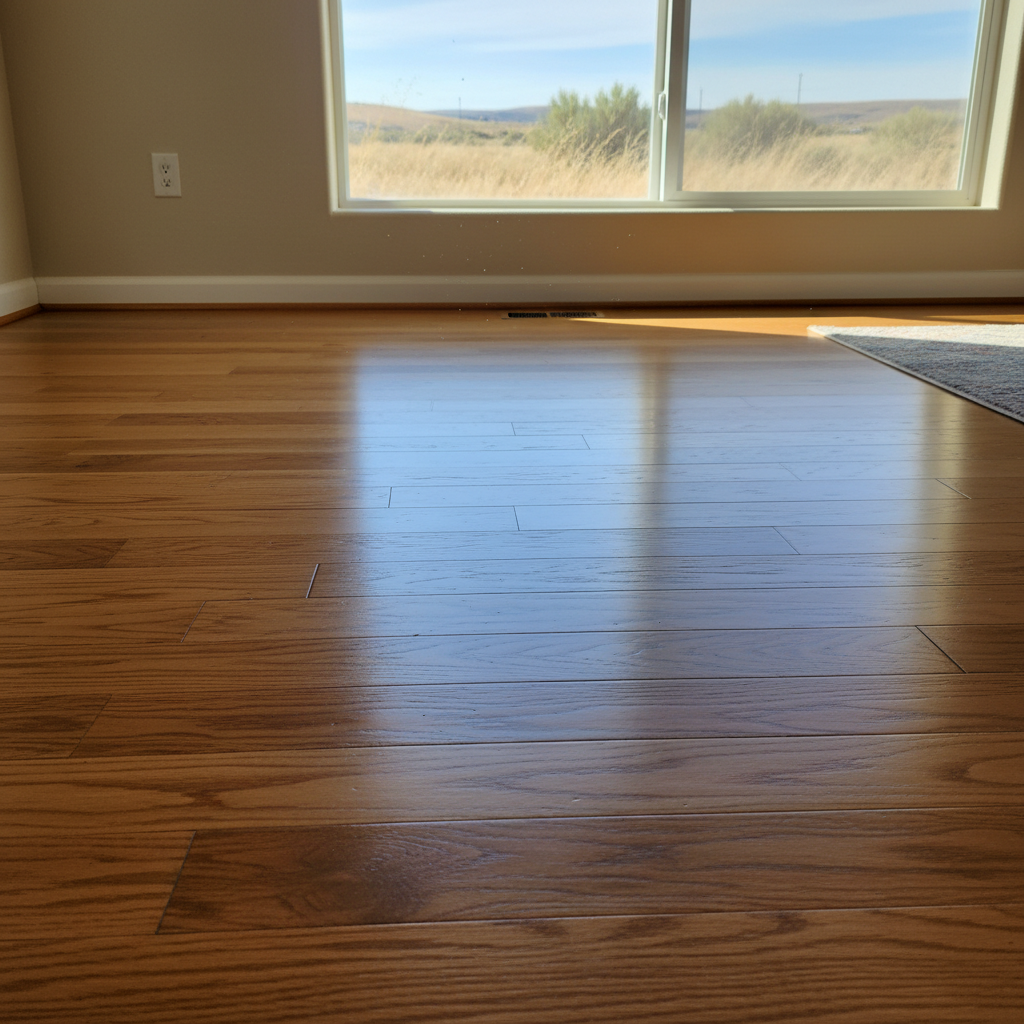
Water standing on a hardwood floor will ruin your day. Out here in Parma, ID, we see everything from frozen pipes bursting during winter cold snaps to supply lines failing under kitchen sinks. When that happens, you are left staring at buckling wood and wondering what comes next.
Over the years at White Oak Restoration Company, our team has answered plenty of questions from local homeowners dealing with soaked timber. Let us walk through the most common things people ask when water gets where it should not.
Can buckling hardwood floors actually be saved?
Most of the time, yes. If you catch the problem early and start drying within 24 to 48 hours, those cupped or buckled boards can often be flattened out. Wood acts like a giant sponge, but it also has memory. Once we extract the trapped moisture using specialized subsurface drying mats and industrial equipment, the wood relaxes back toward its original shape. If the edges have crushed each other or split completely, we will need to do some targeted board replacements, but you rarely need to rip out the whole room if we act fast.
Do I need to tear out the subfloor too?
Not always, but you do have to check it. Water slips right through floor seams and soaks straight into the plywood or OSB underneath. If a contractor just dries the surface and calls it a day, your subfloor stays damp. In our local climate around Canyon County, trapped moisture under a floor leads straight to mold and structural rot. We always check what is happening down below using moisture meters before making any final calls on demolition.
How long does the drying process take?
Plan on three to five days for proper structural drying. Everyone wants their living room back immediately, but rushing this phase is a disaster. Parma features silt loam soils and notable humidity swings that affect how buildings dry out. If you trap moisture under a fresh coat of polyurethane by rushing the timeline, the finish will bubble and peel within months. We run high-flow air movers and low-grain dehumidifiers until the wood reaches its baseline moisture content—no sooner.
Will I need to refinish the whole room?
Not necessarily. If the damage is confined to a small area near an entryway or a dishwasher leak, we can often isolate the repair. Spot sanding, localized drying, and custom-blending a stain can fix small zones without forcing you to refinish the entire open-concept space. However, if the cupping spans across multiple connecting rooms, full sanding and refinishing is the only way to get an even, smooth look.
Can I just use box fans and a heater to dry it out?
Household fans only move surface air. They will not pull the humidity out of the wood grain or reach the water trapped beneath the floorboards. In fact, blasting hot air from a space heater right onto wet hardwood will cause the top of the boards to dry too fast while the bottom stays wet, making the warping and splitting much worse. Professional extraction systems use suction and controlled airflow to draw moisture safely upward.
Will my homeowner's insurance cover this?
That depends entirely on your specific policy and the source of the water. Sudden and accidental plumbing failures are typically covered, while damage resulting from long-term neglect or slow, unaddressed leaks usually is not. White Oak Restoration Company always documents the moisture levels, takes detailed photos, and provides the paperwork you need to make filing your insurance claim as straightforward as possible.